Determinism
Cupcake supports both deterministic and non-deterministic guardrails, giving you the flexibility to choose the right level of governance for your use case.
Deterministic Guardrails
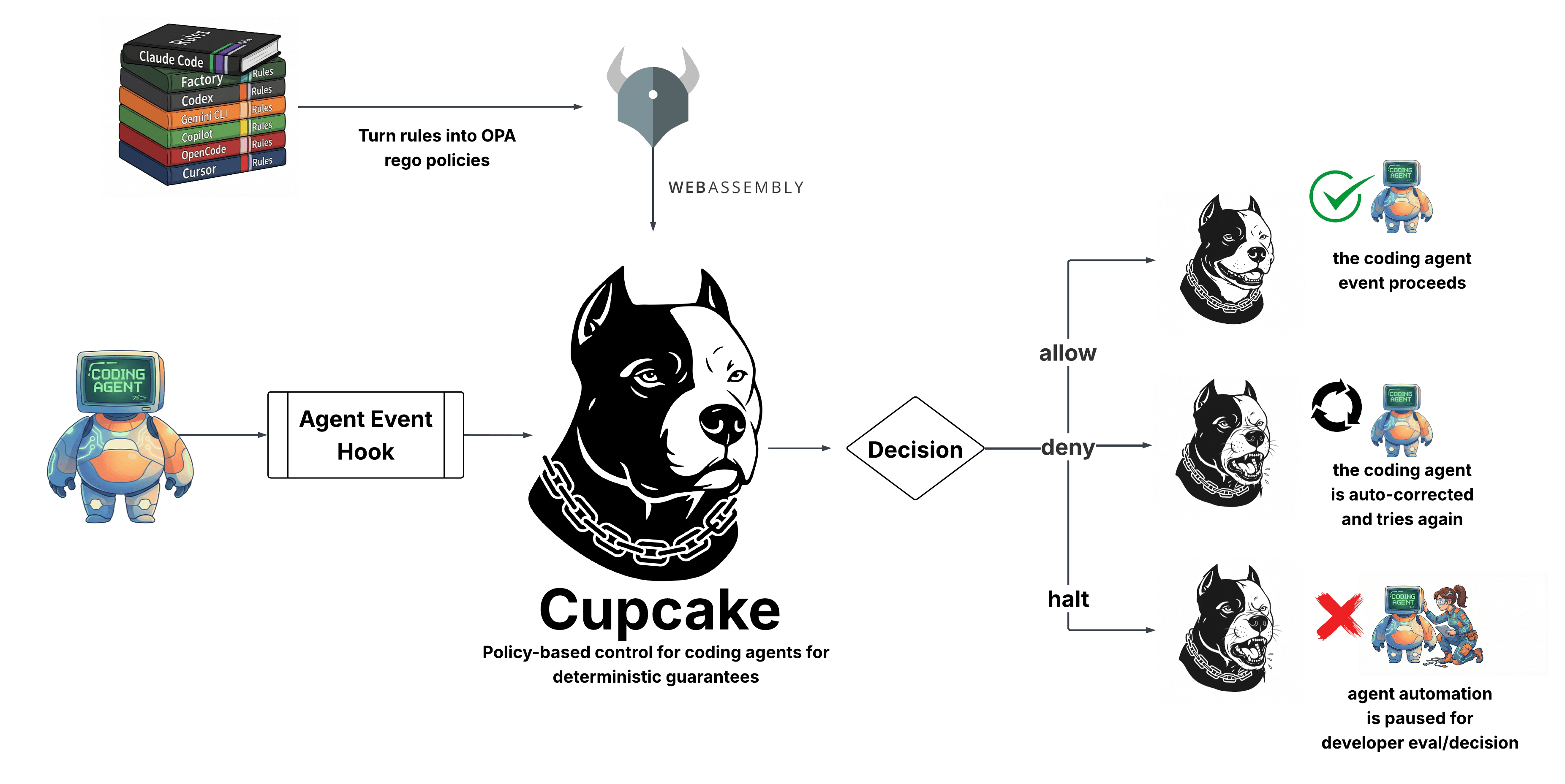
Deterministic policies always produce the same output given the same input. They are:
- Predictable – Same input, same result, every time
- Fast – Sub-millisecond evaluation via WebAssembly
- Auditable – Clear reasoning chain for compliance
- Reliable – No external dependencies at runtime
Use deterministic policies for hard requirements: blocking dangerous commands, protecting sensitive paths, enforcing workflow rules.
Non-Deterministic Guardrails (Watchdog)
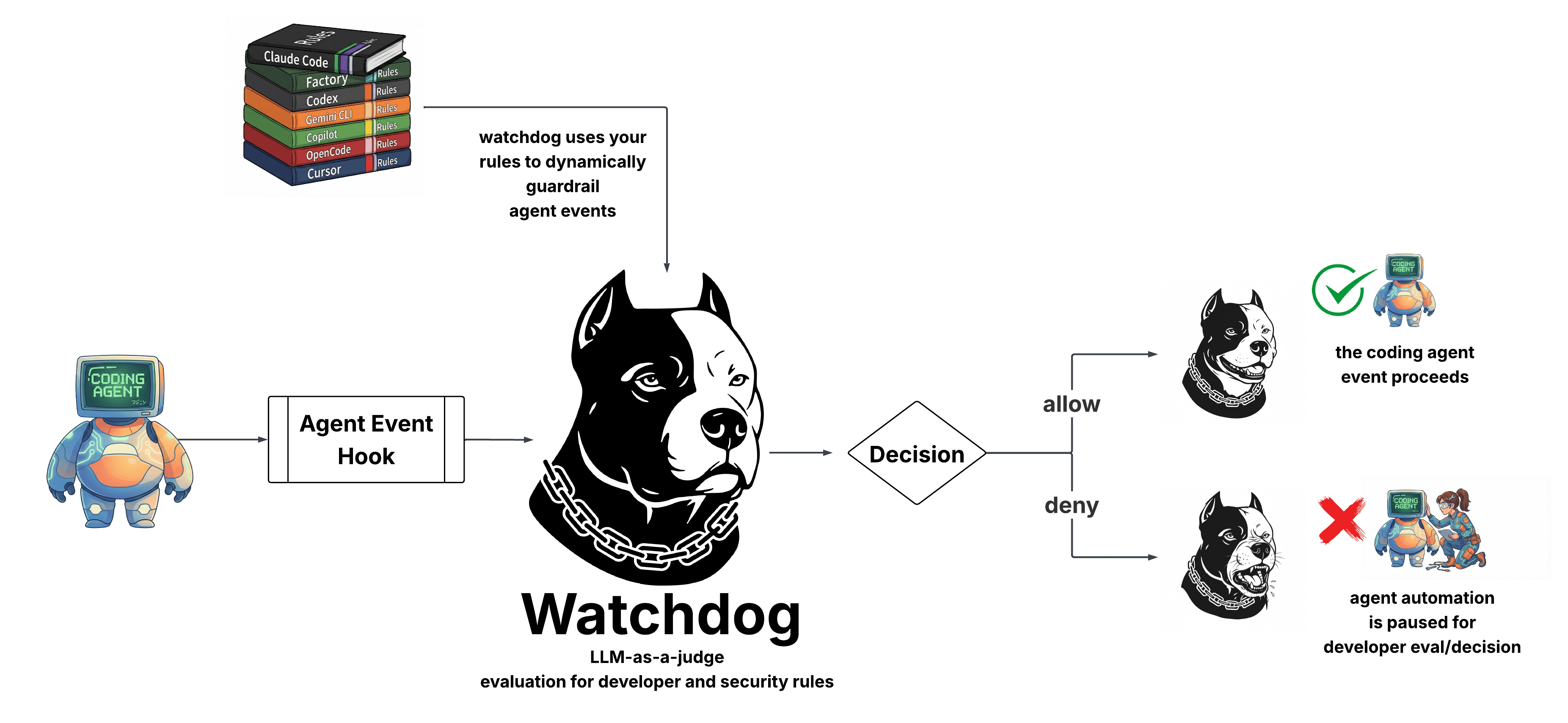
Non-deterministic policies use LLM-as-a-judge to evaluate actions semantically. They are:
- Adaptive – Catches novel threats without new rules
- Context-aware – Understands intent, not just patterns
- Flexible – Evaluates against your existing rules files
- Complementary – Works alongside deterministic policies
Use non-deterministic policies for semantic analysis: detecting misaligned actions, flagging suspicious patterns, evaluating against project-specific guidelines.